Reclaim Your Wendt India Ltd. Shares from IEPF with Kinheritance
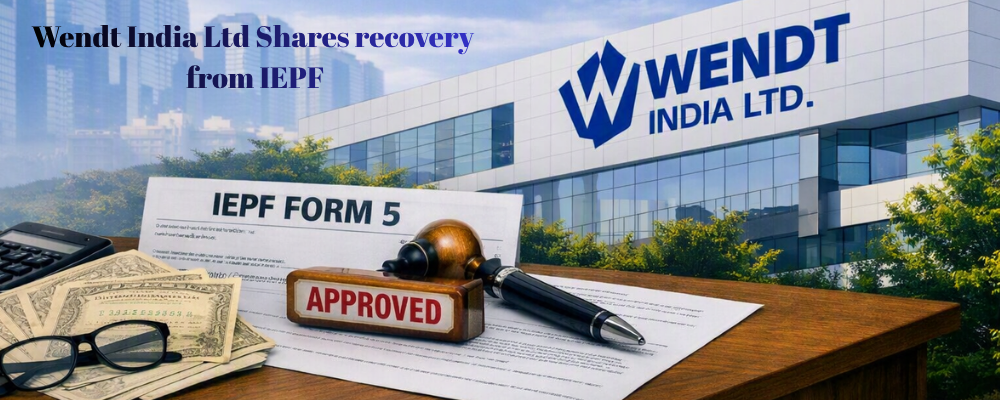
Reclaim Your Wendt India Ltd. Shares from IEPF with Kinheritance
Wendt India Ltd. is a well-known name in India's precision engineering and abrasive products industry. Over the years, many investors have purchased Wendt India shares as part of their long-term investment portfolio. Some shareholders held the stock for decades, while others inherited shares from parents or grandparents. However, many investors are surprised to discover that their Wendt India shares are no longer reflected in their investment records. In numerous cases, this happens because dividends remained unclaimed for seven consecutive years, leading to the transfer of both the unpaid dividends and the related shares to the Investor Education and Protection Fund (IEPF). Although such a transfer may initially appear worrying, shareholders should understand that the transfer does not result in the loss of ownership. The original shareholder or their legal heirs continue to retain the right to recover both the shares and accumulated dividends through the prescribed recovery process.
For investors looking to begin the process of IEPF share recovery, understanding the rules, documentation requirements, and recovery procedure can make the journey significantly easier.
Understanding the Investor Education and Protection Fund
The Investor Education and Protection Fund was established under the Companies Act to safeguard unclaimed investor assets and protect shareholder interests. When dividends remain unpaid or unclaimed for seven consecutive years, companies are legally obligated to transfer those dividends and the corresponding shares to the IEPF Authority. The authority functions as a custodian rather than an owner of the shares. This means that although the shares leave the company's shareholder records and move into IEPF custody, the rightful shareholder continues to retain ownership rights. The shareholder or legal heir can reclaim the assets after establishing entitlement through the prescribed verification process.
This framework ensures that dormant investments remain secure while providing shareholders with a mechanism to recover their assets whenever they are identified.
Why Wendt India Shares Are Transferred to IEPF
One of the most common causes of IEPF transfers is the failure to claim dividends. Investors often change their residential address, email address, bank account, or contact details without updating company records. As a result, dividend payments may remain unclaimed for several years. Physical share certificates represent another common reason. Many investors acquired Wendt India shares when physical certificates were the standard form of ownership. Over time, certificates may be misplaced, damaged, forgotten, or stored away without being revisited. Inheritance-related cases are also a major source of IEPF transfers. In many families, investments remain undiscovered until years after the original shareholder's death. By the time legal heirs find share certificates or investment records, the shares may already have been transferred to IEPF. Administrative issues such as name mismatches, signature differences, outdated KYC records, PAN discrepancies, and incomplete shareholder information can also contribute to prolonged inactivity and eventual transfer.
Why Recovering Wendt India Shares Is Important
Recovering shares transferred to IEPF is often financially significant. Investments that initially appeared modest may have appreciated substantially over time. Long-term shareholders frequently underestimate the current value of older investments until they begin tracing them. In addition to the shares themselves, investors may also become eligible to recover accumulated unpaid dividends that were transferred to the IEPF Authority. Together, the shares and dividends can represent a valuable financial asset. For legal heirs, recovering Wendt India shares is about more than financial value. It helps ensure that family wealth is preserved and passed on to future generations rather than remaining dormant indefinitely.
Preparing Before Starting the Recovery Process
Preparation is one of the most important aspects of a successful claim. Investors should first ensure that they have an active Demat account. Recovered shares are credited only in electronic form, making a valid Demat account mandatory. A functioning bank account is also necessary because recovered dividend amounts are transferred electronically. It is advisable to verify that the bank account is KYC-compliant and reflects current information. Claimants should gather all available ownership-related records before beginning the claim process. These records may include physical share certificates, dividend warrants, annual reports, correspondence from the company, demat statements, bank statements showing dividend credits, and income-tax-related records. If the claim involves inheritance, legal heirs should begin collecting succession-related documents at an early stage since obtaining them can sometimes take considerable time.
How to Check Whether Wendt India Shares Have Been Transferred to IEPF
The first step is establishing the current status of the investment. Old share certificates, folio numbers, dividend warrants, shareholder communications, and demat records can help trace the original investment. Investors should collect every available document, even if it appears incomplete or outdated. Many successful recoveries begin with a single old certificate or dividend warrant discovered among family papers. These documents often provide sufficient information to trace the shareholding and determine whether it remains active or has been transferred to IEPF. Verifying the status of the shares before initiating the claim process helps avoid confusion and ensures that the correct recovery procedure is followed.
Documents Required for Wendt India Share Recovery
Documentation is the foundation of every IEPF claim. Claimants must establish ownership, identity, and entitlement with sufficient evidence. Identity proof generally includes PAN cards, Aadhaar cards, passports, or other government-issued documents. Address proof may consist of Aadhaar cards, passports, driving licenses, or utility bills. Banking records are required so that recovered dividends can be credited correctly. Investors often submit cancelled checks, passbook copies, or recent bank statements. Demat account details are also essential because recovered shares are credited electronically. A client master list issued by the depository participant is usually required. Ownership evidence may include original share certificates, dividend warrants, historical correspondence, tax records, transaction records, and other supporting documents. Additional documents may include Form IEPF-5 acknowledgements, indemnity bonds, affidavits, declarations, and advance receipts.
Recovering Shares When the Original Shareholder Is Deceased
A large number of recovery applications involve inherited investments. When the original shareholder has passed away, legal heirs must first establish lawful entitlement before the shares can be transferred. The exact documentation required depends on the circumstances of the family and the nature of the claim. Commonly required documents may include a death certificate, legal heir certificate, succession certificate, probate of a will, letters of administration, or family settlement documents. Where multiple legal heirs exist, additional declarations or no-objection certificates may be necessary. Although inheritance claims typically require greater scrutiny, the legal heirs retain the right to recover shares and dividends once entitlement has been properly established.
Filing Form IEPF-5
The official recovery process begins with filing Form IEPF-5 through the prescribed online platform. The form requires details relating to the claimant, company information, shareholding particulars, dividend information, banking details, and demat account information. Each field should be completed carefully because inaccuracies can lead to delays during verification. Names, PAN details, folio numbers, addresses, bank details, and demat information should match supporting documents exactly. After successful submission, a Service Request Number (SRN) is generated. This reference number is used throughout the recovery process and should be retained carefully. The acknowledgment generated after filing Form IEPF-5 forms an important part of the documentation package submitted later.
Submission of Supporting Documents
Following the online filing process, claimants must prepare a physical dossier containing all supporting documents. The dossier generally includes identity proof, address proof, bank account details, demat records, ownership documents, succession records where applicable, and the signed form acknowledgment. Supporting declarations, indemnity bonds, affidavits, and related forms should be completed carefully and reviewed before submission. Consistency between all records is critical. Differences in names, signatures, addresses, or account details commonly result in verification queries and delays. Once the dossier is complete, it is submitted for review and verification.
Verification Process
After receiving the claim documents, the verification stage begins. The company examines the information submitted by the claimant and compares it with historical shareholder records. Authorities verify ownership details, dividend records, signatures, banking information, demat account records, and succession documents when applicable. If discrepancies are identified, additional information or supporting records may be requested. Common verification challenges include spelling variations, outdated addresses, signature differences, missing ownership records, and incomplete succession documentation. Promptly responding to verification requests can significantly improve processing timelines. Following successful verification, a report confirming the legitimacy of the claim is prepared and forwarded to the IEPF Authority.
Final Approval by the IEPF AuthorityThe IEPF Authority conducts a final review after receiving the verification report.Officials examine the claim documents alongside the verification findings to ensure that the claimant is the rightful shareholder or legal heir.Once approved, the recovered Wendt India shares are credited directly to the claimant's Demat account. Eligible dividend amounts are transferred electronically to the claimant's registered bank account.This final stage restores complete ownership rights to the claimant.
Common Challenges During Wendt India Share Recovery
While the recovery process is structured and well-defined, several practical challenges may arise.The most common issue is incomplete documentation. Missing share certificates, unavailable folio numbers, and absent ownership records often require additional efforts to establish entitlement.Name mismatches are another frequent challenge. Changes due to marriage, the use of initials, typographical errors, and historical discrepancies can create complications during verification.Signature variations can also lead to delays, particularly when shares were purchased many years earlier and current signatures differ from historical records.Inheritance-related cases often involve additional scrutiny because ownership must be transferred to the correct beneficiary. Missing legal documents or disputes among heirs can extend processing times.Fortunately, most challenges can be resolved through careful preparation and accurate documentation.
Tips for a Smooth Recovery Process
- Investors should review all records carefully before submitting an application. Small mistakes in names, addresses, account numbers, or ownership details can significantly affect verification timelines.
- Keeping both physical and digital copies of submitted documents is highly recommended. This makes responding to future queries easier and ensures that important records remain accessible.
- Legal heirs should begin collecting succession-related documents as soon as possible. Delays often arise because required legal records are not readily available when the claim process begins.
- It is also important to maintain an active Demat account and a functional bank account throughout the claim period. Updated KYC records can help reduce verification-related complications.
- Most importantly, shareholders should not assume that an old investment has become worthless. Many long-forgotten holdings continue to hold significant value and may represent substantial family wealth.
Frequently Asked Questions About Wendt India Share Recovery
Many investors ask whether shares transferred to IEPF can still be recovered. In most cases, the answer is yes, provided ownership or legal entitlement can be established through appropriate documentation.
Another common concern relates to lost share certificates. While certificates are useful evidence of ownership, recovery may still be possible through alternative records and company documentation.
Legal heirs frequently ask whether they can recover shares belonging to deceased family members. They can, subject to establishing entitlement through succession-related documents and completing the prescribed verification process.
Investors often wonder whether accumulated dividends can be recovered along with the shares. In most successful claims, eligible dividends transferred to IEPF are recoverable along with the corresponding shares.
Conclusion
Wendt India Ltd. shares transferred to the Investor Education and Protection Fund are not permanently lost. Whether the transfer occurred because of unclaimed dividends, forgotten investments, lost share certificates, inheritance-related circumstances, or outdated shareholder information, the rightful shareholder or eligible legal heir retains the legal right to recover those assets.The recovery process involves identifying the investment, gathering supporting records, filing the required claim forms, completing verification procedures, and obtaining final approval from the IEPF Authority.For investors researching unclaimed shares recovery, taking action today can help restore ownership of valuable investments, recover accumulated dividends, preserve family wealth, and ensure that long-forgotten assets continue contributing to long-term financial security.
India’s Leading Shares Recovery & IEPF Claim
Expert assistance for recovering lost, unclaimed, or IEPF-transferred shares and unpaid dividends.